How to choose the right kitchen knives set for South African kitchens
Practical, South Africa-focused advice for choosing a kitchen knives set: what to include, steel and construction, care, storage and realistic price ranges.
Buy for how you cook
Choose sets that include a chef’s, paring and serrated knife for everyday South African kitchens.
Balance cost and care
Mid-range forged sets often offer the best long-term value when matched with regular sharpening.
Protect and maintain
Hone frequently, sharpen periodically and store knives safely to keep edges working well.
Start with purpose: what you actually need
We begin by asking how you cook. For most households, a sensible kitchen knives set covers three daily tasks: chopping and slicing with a chef's knife, precise trimming with a paring knife, and clean slicing for bread or tomatoes with a serrated blade. If you cook for a family or entertain often, add a utility or carving knife for extra flexibility.
Core knife roles
- Chef's knife (8-10 inches): the workhorse for veg, meat and most prep.
- Paring knife (9-11 cm): small tasks, peeling and detail work.
- Utility knife (13-18 cm) or small chef’s knife: in-between tasks.
- Bread/serrated knife: sliced bread and soft-skinned produce.
Buying a set can be simpler than hunting for singles, but check which knives are included - some 6-8 piece sets add steak knives and kitchen shears you may not use. When you want a quick browse of options, explore our Kitchen & Dining collection for commonly bundled sets.
Forged vs stamped; steel and edge basics
A forged knife is often heavier and better balanced; stamped knives are lighter and can be excellent value. Steel types vary: higher-carbon stainless steels hold an edge longer but may cost more and need routine care. These differences matter less than fit and feel - a well-balanced stamped knife you sharpen regularly can out-perform an ill-balanced high-end blade in everyday cooking. For an overview of how experts test and recommend sets, see practical reviews and testing notes online.
Fit and feel: test before you commit
If possible, hold the chef’s knife in a store or at a friend’s kitchen. The handle should feel secure, not slippery; the blade profile should suit your chopping style - more belly for rocking, straighter edge for push-slice techniques. For South African kitchens where space and storage vary, consider whether a block set fits your counter or if a magnetic strip or in-drawer storage is better.
Local considerations
Buying locally means easier warranty support and access to sharpening services: many South African retailers and brands list servicing or replacement policies. Prices for basic, decent-quality kitchen knife sets in South Africa commonly start around R350-R700 for entry stamped sets, while mid-range forged sets typically sit in the R1 200-R3 500 band; premium or professional sets go higher. These are estimates - actual pricing and availability can vary by retailer and season. (scanpan.co.za)
Care and maintenance that keep a set useful for years
We recommend a simple maintenance routine: hone the blade with a steel or ceramic rod before each cooking session to keep the edge aligned, and sharpen on a stone or by a professional when the blade begins to tug (few times a year for regular home use). Avoid dishwashers - hand-wash and dry to protect handles and finish. For more on safe sharpening and edge checks, consult tested kitchen guides.
Storage and safety
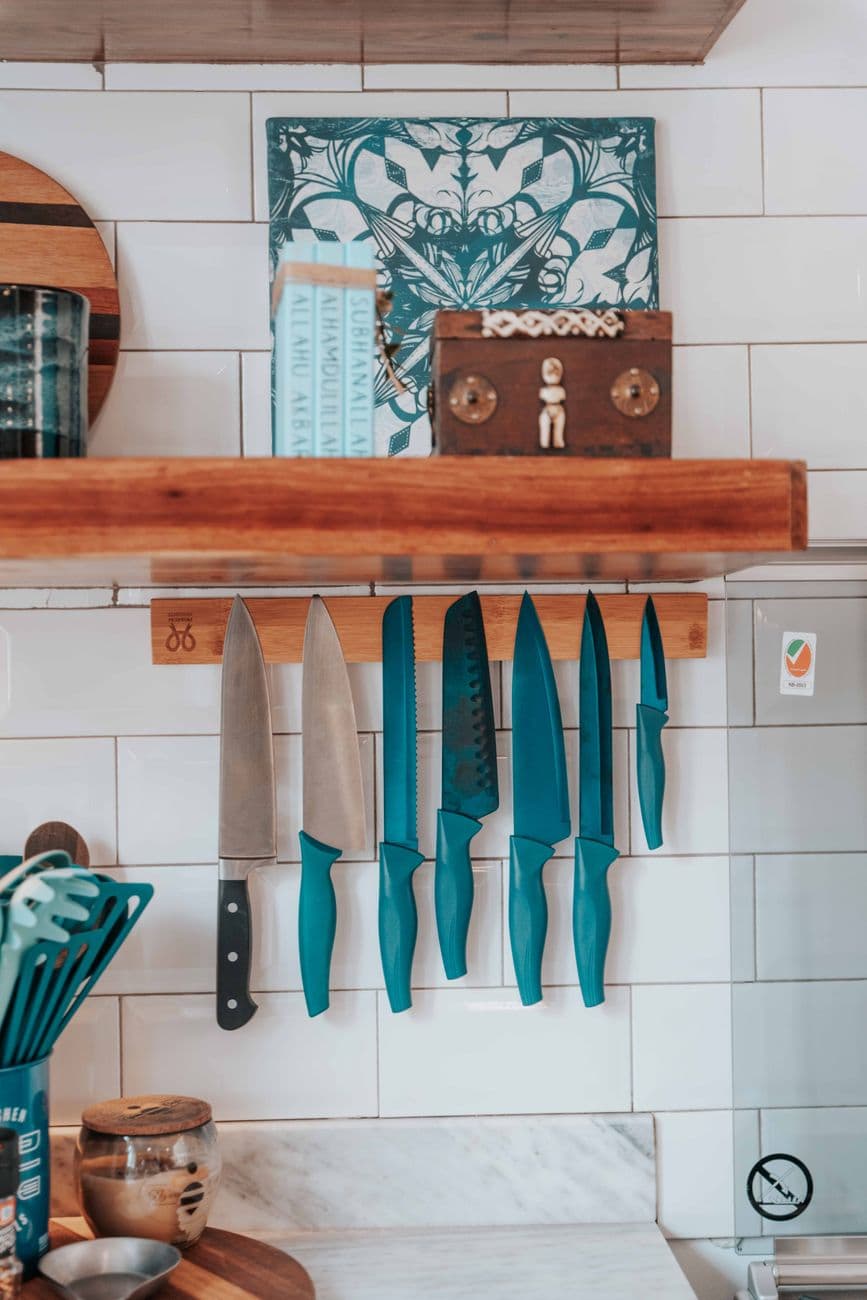
Store knives in a block, on a magnetic strip away from children’s reach, or in an in-drawer tray to protect edges. Wherever you keep them, make storage part of your routine so knives stay sharp and safe. If countertop space is limited, a compact 3-4 piece set plus a single good chef’s knife often serves better than a bulky 12-piece block.
How to choose between sets - a short checklist
- Does the set include a chef’s knife you like by feel?
- Are the materials (steel, handle) suitable for your maintenance habits?
- Is there an easy local sharpening or warranty option?
- Will the storage solution fit your counter or drawer?
If you already own a reliable chef’s knife, consider buying only a few complementary pieces rather than a full block set. For curated selections that pair chef’s knives with complementary tools, see our Knives range and related advice in the Kitchen & Dining articles.
Final guide: choose with confidence
We recommend starting with a mid-range set that includes a well-balanced chef’s knife, paring and serrated knife. Try those blades at home, hone them regularly, and replace or add specialty pieces as your cooking evolves. If you want professional-level longevity, budget for sharpening services and choose steels that match your willingness to maintain the edge. For example, a R1 200-R2 500 set with forged construction often gives the best balance between durability and everyday performance in South African kitchens. These figures are approximate and depend on brand and set composition.
Sources

Performance Marketing Lead at Bash, with a background in marketing from UNISA and years spent driving paid search strategy at leading e-commerce brands like takealot.com, I focus on data-driven growth, Google Ads optimization, and scaling digital performance.
Disclaimer: This content is for educational purposes only. Product availability, pricing, and specifications are subject to change. Always verify current details on the retailer's website before making a purchase.