Coffee machine budget guide - cheapest machines and real cost-per-cup in South Africa
Practical South African cost-per-cup guide: compare cheapest capsule, filter and manual machines with real-world per-cup maths and local price examples.
Understand the real cost
Compare amortised machine cost, coffee consumables and energy to reveal true per-cup price.
Pod vs filter trade-off
Pods cost more per cup but are fastest; filter machines usually win on daily cost when brewing several cups.
Run your own numbers
Use our 3-year amortisation method and local prices to find what actually fits your budget.
How we measure cost-per-cup (what we include)
When we say “cost-per-cup” we add three simple parts so the number reflects real life: machine amortisation (upfront price spread over ownership), coffee consumables (capsules or ground coffee), and energy used to heat the water. We use a 3-year ownership window as a practical planning horizon and show example daily-use scenarios so you can change the inputs for your household.
The basic formula
Cost-per-cup = (Machine price ÷ (years × 365 × cups/day)) + Consumable cost per cup + Energy cost per cup. We explain each term and give South African price examples below so the math is easy to follow.
Key assumptions we use in examples
- Ownership period: 3 years (practical, realistic for budget planning).
- Electricity price: we use a recent typical residential rate as an example; your actual municipal tariff may differ. For planning, many households will see around R2.70-R3.00 per kWh on current published rates.
- Energy per brew: small, single-serve heating is low - think tenths of a kWh (a kettle boil of 1 litre is roughly 0.1-0.2 kWh, so a single 40-200 ml cup uses a small fraction of that). We model small brews at ~0.03-0.06 kWh per cup depending on size.
- Coffee dose: espresso-style pods typically contain about 5-7 g of coffee; filter cups use 10-15 g depending on strength. The SCA golden-ratio guidance informs these typical ranges.
Budget bands: what prices buy you in South Africa
We separate three practical budget bands so you can match expectations to price: compact pod machines (very convenient), basic drip/filter machines (simple and cheap to run), and entry manual/espresso options (more hands-on, still affordable). For shopping links and a place to compare models, check our Coffee Machines collection on Bash. Coffee Machines.
1) Pod/ capsule machines - convenience band
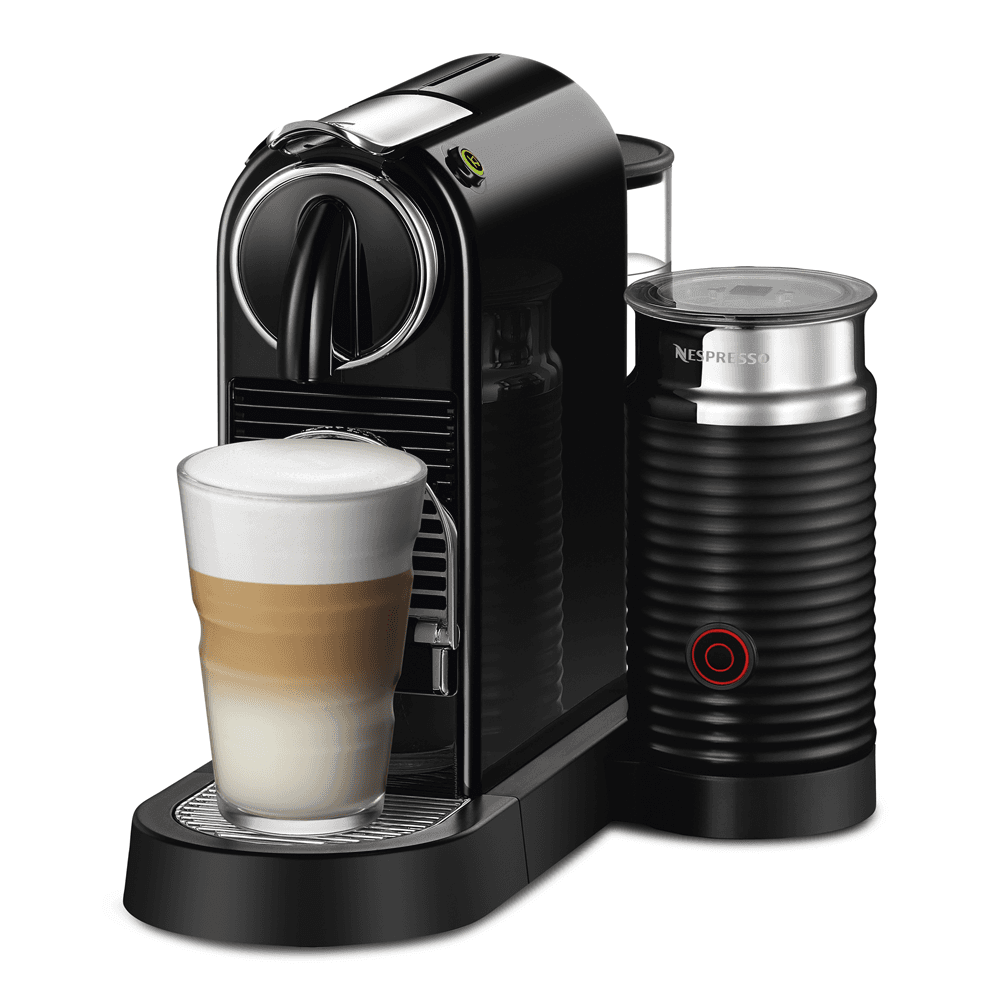
Typical upfront: around R2 000-R3 000 for compact Original-line pod machines from the official site or local retailers. For example, a common compact Nespresso Original-line machine is listed near R2 700-R2 800.
Consumables: genuine Nespresso Original sleeves (10 capsules) often sell around R120 for a 10-sleeve pack, which works out to roughly R12 per capsule as an accessible example price point. Capsule prices vary by blend and volume.
2) Basic drip / filter brewers - low running cost band
Typical upfront: simple drip machines commonly sit between R700 and R1 500. A widely available Russell Hobbs filter machine can be found around R799 in current price comparisons.
Consumables: good locally roasted ground coffee often sells at roughly R100-R130 per 250 g bag; that price range is what we use in the worked examples below.
3) Moka pot / manual espresso & small pump machines - hands-on budget
Typical upfront: a stove-top Moka pot or basic manual espresso unit can cost from a few hundred rand up to R1 200 depending on material and brand. These give strong coffee at lower consumable cost but need a little practice.
Note: prices and availability change with promotions and stock - always check retailer pages for current offers and warranty details before buying. For a broader view of appliances, our Appliances hub on Bash lists current ranges. Appliances.
Three real-world cost-per-cup examples
We show the arithmetic in simple steps so you can substitute your own numbers. All figures below are worked examples using the assumptions in the first section (3-year ownership, local price examples). Prices are estimates or recent list prices - treat them as planning figures, not exact invoices.
Scenario A - Solo commuter, capsule machine (2 cups/day)
Inputs (example): Inissia/Essenza compact pod machine R2 700; capsule cost ~R12 per capsule; energy per brew 0.03 kWh; electricity R2.71/kWh. Machine amortisation: R2 700 ÷ (3 × 365 × 2) ≈ R1.23 per cup. Energy cost: 0.03 kWh × R2.71 ≈ R0.08 per cup. Total per cup ≈ R12 + R1.23 + R0.08 = R13.31. Nespresso sleeve and machine prices used here are taken from recent local listings.
Scenario B - Two-person household, filter coffee (4 cups/day total)
Inputs (example): basic drip machine R799; 250 g ground coffee R110; dose 10 g per cup; energy per cup ~0.06 kWh; electricity R2.71/kWh. Machine amortisation: R799 ÷ (3 × 365 × 4) ≈ R0.18 per cup. Coffee cost per cup: (R110 ÷ 250 g) × 10 g ≈ R4.40. Energy cost: 0.06 kWh × R2.71 ≈ R0.16. Total per cup ≈ R4.40 + R0.18 + R0.16 = R4.74. This shows why filter coffee is frequently the cheapest per cup when you include amortisation and energy. Price references: local ground-roast listings and comparative machine pricing.
Scenario C - Budget home barista, Moka pot or small machine (1 cup/day)
Inputs (example): Moka pot or low-cost manual unit R400; coffee at R110 per 250 g; dose 14 g for a stronger cup; energy per brew 0.05 kWh; electricity R2.71/kWh. Amortisation: R400 ÷ (3 × 365 × 1) ≈ R0.36 per cup. Coffee cost: (R110 ÷ 250) × 14 ≈ R6.16. Energy cost: 0.05 kWh × R2.71 ≈ R0.14. Total per cup ≈ R6.66. This gives a strong, low-running-cost cup, though you trade convenience and speed for lower unit cost. Ground coffee price examples drawn from local roasters’ listings.
Quick decisions we make with these numbers
1) If convenience (fast, consistent milk drinks, no measuring) matters and we drink 1-2 capsule cups daily, a pod machine is often worth the higher per-cup cost. 2) If we brew multiple cups daily, a filter machine usually wins on cost-per-cup. 3) If we want strong espresso-style drinks but have limited budget, a Moka pot or entry manual espresso offers a good middle ground.
Consideration: in South Africa, electricity costs and local promotions shift these calculations. If your municipal tariff is higher than the examples above, energy contribution rises - but consumables (capsules vs ground coffee) usually dominate the final per-cup figure.
How to use this at home - a quick checklist
- Estimate your daily cups and preferred drink size.
- Find the machine’s local price and plug it into the amortisation line (we used 3 years as a baseline).
- Check consumable costs - per-capsule or per-gram - from the brand or local roasters.
- Use your own electricity rate from your latest bill for the most accurate energy cost per brew.
If you’d like, we can run the same calculation with your exact machine price, the specific capsule or coffee you buy, and your municipal electricity tariff - we’ll plug your numbers into the same simple formula so you get a personalised cost-per-cup you can rely on.

Performance Marketing Lead at Bash, with a background in marketing from UNISA and years spent driving paid search strategy at leading e-commerce brands like takealot.com, I focus on data-driven growth, Google Ads optimization, and scaling digital performance.
Disclaimer: This content is for educational purposes only. Product availability, pricing, and specifications are subject to change. Always verify current details on the retailer's website before making a purchase.
Sources
- Nespresso - Original capsules and pricing (South Africa).
- Nespresso Inissia / Essenza machine listings (local prices).
- Eskom / tariff summaries and recent residential rates (reference for electricity example).
- PriceCheck example listing for Russell Hobbs filter coffee makers (current price band reference).
- Wild Coffee - example 250 g ground coffee price used in calculations.
- Practical kettle energy guidance used to estimate heating kWh per cup.